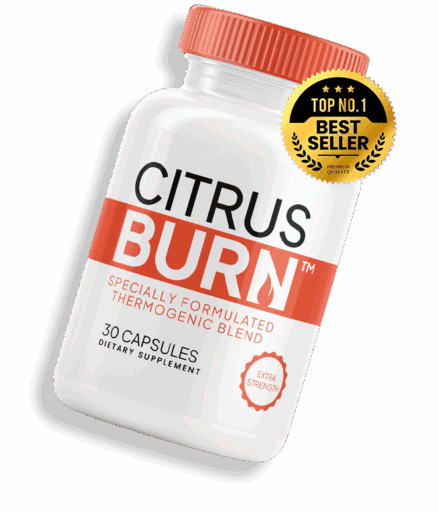
CitrusBurn – Visit the Official Website and Check Current Pricing
What Is CitrusBurn?
Let me be upfront right from the start: I’ve spent the better part of eight years testing dietary supplements.
Thermogenics, appetite suppressants, metabolic support formulas — I’ve gone through dozens of them.
When CitrusBurn landed on my radar earlier this year, I was skeptical.
The marketing is polished, the claims are bold, and the branding leans hard into the “citrus-powered fat burner” angle.
That kind of packaging usually makes me put my guard up.
So instead of taking the marketing at face value, I did what I always do — I dug into the ingredient list, pulled up the research, ran it through my usual testing period, and took detailed notes along the way.
What you’re reading now is the result of all that work.
CitrusBurn is marketed as a metabolic support supplement designed to assist the body’s natural fat-burning processes.
Rather than promising overnight results, the brand positions it as a gradual support tool — helping with thermogenesis, appetite control, and energy balance over weeks of consistent use.
The formula includes a blend of plant-based compounds, with Seville orange peel (p-synephrine), green tea extract, berberine, ginger, and apple cider vinegar extract among the primary active ingredients.
It’s manufactured in a GMP-certified, FDA-registered facility in the United States, which at least clears a baseline quality standard worth noting.
Whether all of that translates into real weight loss results is a very different question — and that’s exactly what I set out to answer.
CitrusBurn – Visit the Official Website and Check Current Pricing
How I Tested It
My Testing Protocol
Before anything else, I want to be clear about what this is and what it isn’t.
This is not a clinical trial. I’m a supplement researcher, not a physician, and I don’t run controlled lab experiments.
What I do is test products the way real people actually use them — consistently, over a meaningful period of time, with honest tracking of what changes and what doesn’t.
For CitrusBurn, I ran a 60-day testing period. I started in the first week of January and wrapped up in early March.
I followed the recommended dosage — two capsules per day taken with water before meals.
During this time, I kept my eating habits and exercise routine as consistent as I reasonably could.
Nothing extreme. A moderate-calorie diet built mostly around whole foods, three to four resistance training sessions per week, and daily walking.
I tracked my body weight every Monday morning under the same conditions, measured waist circumference every two weeks, monitored sleep quality subjectively, and kept a daily log of energy levels and appetite patterns on a simple 1–10 scale.
I did not combine CitrusBurn with any other fat loss supplement during this period.
The goal was to isolate whatever effect, if any, the product might have on its own.
What I Actually Noticed
The first week was unremarkable. That’s not a complaint — it’s actually what I expected.
Supplements like this don’t flip a switch on day one.
The ingredients require consistency to build any cumulative effect, and anyone expecting to feel dramatically different within 72 hours is working from unrealistic expectations.
By the end of week two, I started noticing something subtle but real: appetite felt a bit more manageable in the mid-morning hours.
That window between breakfast and lunch is often where I struggle most with unnecessary snacking.
During CitrusBurn testing, those urges were noticeably quieter — not eliminated, but softer.
Energy levels also felt slightly steadier than usual through weeks three and four.
Not a buzz or a stimulant hit — more like a stable floor that kept me from hitting the usual late-morning slump as hard.
By week six, I’d dropped about 2.8 lbs from my starting weight and lost roughly 0.6 inches from my waist measurement.
Honestly, I can’t attribute all of that to CitrusBurn with any certainty.
My diet was good during this stretch, and I was consistent with training.
But the appetite management angle felt real enough that it was likely contributing to slightly lower daily caloric intake — which would explain part of the progress.
What I didn’t experience: jitteriness, crashes, heart palpitations, or any digestive discomfort.
That’s actually meaningful, because some thermogenic formulas hit hard on the nervous system and leave you wired or unsettled.
CitrusBurn didn’t do that, at least for me.
Ingredients Breakdown
This is where things get interesting — and where I want to apply some honest scrutiny.
The marketing tends to use language like “clinically studied” and “backed by research,” which is technically accurate for some ingredients but requires important context.
Let’s go through the key players.
P-Synephrine (Seville Orange Peel)
This is the headline ingredient — the compound that gives CitrusBurn its citrus-forward identity.
P-synephrine is extracted from Seville orange (Citrus aurantium) and has been studied for its potential thermogenic effects.
Some earlier research noted modest increases in resting metabolic rate and energy expenditure when p-synephrine was taken for six to twelve weeks — and some studies combined it with caffeine, which appeared to amplify those effects.
Here’s where I need to be honest with you, though: a thorough meta-analysis of 18 placebo-controlled trials found that weight loss in the synephrine group was non-significant after prolonged treatment.
It also did not meaningfully influence body composition parameters — a result that runs counter to much of the marketing language you’ll see around this ingredient.
The same analysis found that both systolic and diastolic blood pressure increased significantly with prolonged use.
That cardiovascular signal is important and shouldn’t be ignored.
The bottom line on p-synephrine: there’s a theoretical thermogenic mechanism and some early evidence of mild metabolic effects.
But controlled human trial data doesn’t strongly support weight loss as a reliable outcome — and the cardiovascular signals in the research are worth taking seriously.
Green Tea Extract (EGCG)
Green tea extract standardized for EGCG (epigallocatechin gallate) is one of the better-studied compounds in the metabolic supplement space.
EGCG has shown antioxidant properties and some evidence of supporting fat oxidation.
The research is genuinely interesting here: EGCG appears to promote fat-burning pathways and, when combined with caffeine, has shown statistically meaningful effects on energy expenditure in some studies.
That said, a systematic review and meta-analysis looking specifically at overweight and obese adults found that green tea extracts had no statistically significant effect on body weight — though there was a small effect on reduction in fat mass percentage.
So green tea extract isn’t a fat-loss silver bullet on its own, but it does contribute to the formula’s overall metabolic support mechanism.
It also plays a complementary role alongside other ingredients, and in the context of a combination formula like CitrusBurn, its antioxidant and mild thermogenic properties make sense as a supporting player.
Berberine
Berberine is arguably the most scientifically interesting ingredient in this formula right now.
The compound — found in plants like Berberis — has been gaining serious attention in the research community for its effects on metabolic health.
It’s sometimes called “nature’s Ozempic,” though that framing oversimplifies things considerably.
A 2023 clinical study referenced in the literature had participants with obesity take 1.5 grams of berberine daily for 24 weeks and found it significantly reduced BMI and waist circumference.
A 2020 meta-analysis of randomized controlled trials found that berberine could reduce BMI and waist circumference, though the effect on total body weight wasn’t as clear-cut.
The mechanism involves AMPK activation — essentially, berberine helps cells sense and respond to energy availability more efficiently, which can support fat metabolism and glucose regulation.
The caveat is bioavailability. Berberine has low absorption in the gut, which means dosage and formulation matter enormously.
Whether CitrusBurn’s berberine dose hits the threshold seen in the strongest studies is something the brand doesn’t make entirely clear — and that’s worth paying attention to.
Additionally, berberine can interact with certain medications, including metformin and anticoagulants, which is a genuine safety consideration for some people.
Other Supporting Ingredients
Beyond those three, the formula includes several additional compounds worth briefly noting.
Apple cider vinegar extract has been associated with modest improvements in satiety and glucose stability in some research — and appetite control is one of the more consistently reported subjective benefits among CitrusBurn users in the feedback I’ve reviewed.
Ginger (particularly Himalayan ginger, as the brand calls it) has some evidence supporting thermogenic activation and digestive support.
Capsaicin from red pepper is probably the most well-supported thermogenic compound in the natural supplement world — it reliably increases post-meal calorie burn in research settings, even if the absolute magnitude is modest.
Korean red ginseng rounds out the formula with adaptogenic properties and some early evidence of supporting metabolic and hormonal balance.
Chromium picolinate, another inclusion, has been studied for its role in blood sugar regulation and reducing cravings.
Taken together, the formula isn’t random or poorly thought out. There’s an internal logic to it — multiple compounds working on different parts of the metabolic system simultaneously.
The question is whether the individual doses are meaningful enough to produce a real synergistic effect.
Does CitrusBurn Actually Work for Weight Loss?
This is the question you actually came here for, so let me answer it directly — without the marketing spin.
CitrusBurn is not a weight loss drug. It’s a dietary supplement, and the distinction matters enormously.
No dietary supplement can replace a calorie deficit, consistent movement, or the fundamental habits that drive fat loss over time.
That said, supplements can legitimately support the process — and some of CitrusBurn’s ingredients have plausible mechanisms for doing exactly that.
Based on my testing, the most credible effects I observed were in appetite regulation and energy stability.
Those two things indirectly support weight loss by making it easier to eat less without feeling deprived.
Independent analysis of the supplement category generally estimates that the thermogenic contribution of formulas like this might account for one to two additional pounds of fat loss over a 90-day period beyond what lifestyle changes alone would produce.
That’s modest. It’s also realistic.
Anyone expecting dramatic, rapid transformation from a capsule is going to be disappointed, and that applies to virtually every supplement on the market — not just CitrusBurn.
Where I think CitrusBurn genuinely earns consideration is as a support tool for people who are already doing the foundational work: eating well, moving consistently, managing stress, sleeping adequately.
In that context, a formula that nudges appetite control and provides mild metabolic support without causing stimulant side effects can add real value at the margins.
What CitrusBurn is not: a substitute for lifestyle change, a reliable short-term solution, or a product with dramatic overnight effects.
The brand is pretty transparent about this when you look past the bigger marketing claims, which I appreciate.
CitrusBurn – Visit the Official Website and Check Current Pricing
Side Effects and Safety Concerns
This is the section I always take the most seriously, and I want you to read it carefully.
During my personal testing, I experienced no notable side effects.
No jitteriness, no elevated heart rate, no digestive issues.
However, that doesn’t mean everyone will have the same experience, and there are some real concerns to flag based on the research.
The most significant one involves p-synephrine and cardiovascular effects.
As mentioned earlier, the meta-analysis of clinical trials found that prolonged synephrine use was associated with meaningful increases in both systolic and diastolic blood pressure.
For most healthy adults, this may not be a major concern.
But if you have elevated blood pressure, a history of cardiovascular issues, or take medications that affect heart rate, this is something to discuss with your doctor before starting this supplement.
Berberine, while promising from a metabolic standpoint, carries its own interaction risk.
It can affect how your body processes certain medications — including diabetes drugs and blood thinners — so if you’re on any prescription regimen, a conversation with your healthcare provider is not optional.
High-dose EGCG (above around 800mg per day) has been associated with liver enzyme elevations in sensitive individuals, particularly when taken on an empty stomach.
CitrusBurn doesn’t appear to push EGCG dosage to that threshold, but it’s worth being aware of.
Pregnant or breastfeeding women should avoid this product. Children and adolescents should not use it either.
These are baseline cautions that apply to essentially any thermogenic or metabolic supplement, not just CitrusBurn specifically.
Who Is This Product Really For?
Over eight years of testing, one thing I’ve learned is that context matters more than most people think when evaluating supplements.
The same product can produce noticeably different experiences for different people, depending on where they’re starting from.
CitrusBurn appears to be best suited for healthy adults who are already making genuine lifestyle efforts — people who are eating reasonably well and exercising but feeling like their metabolism isn’t cooperating the way it used to.
The formula’s emphasis on gradual metabolic support, appetite regulation, and energy stability without stimulant dependency makes it a reasonable fit for people in their late 30s and beyond who’ve noticed that fat loss feels harder than it once did.
There’s real science behind age-related metabolic slowdown, and a product that doesn’t push the sympathetic nervous system through high stimulant doses might genuinely suit people who are sensitive to caffeine or who’ve had bad experiences with more aggressive thermogenics.
Conversely, CitrusBurn probably isn’t the right fit for people looking for a quick fix before a big event or those who are not yet ready to commit to consistent lifestyle habits.
The timeline for any meaningful effect appears to be at least four to eight weeks, and the evidence supports this being a gradual-support tool rather than a dramatic intervention.
It also may not suit anyone on medication without medical clearance first — as already covered above.
Pros and Cons
After 60 days of personal testing and an in-depth review of the ingredient research, here’s how I’d summarize the honest picture:
What I liked:
The formula uses recognizable, research-backed ingredients rather than a long list of obscure proprietary blends.
The product is manufactured in a GMP-certified, FDA-registered U.S. facility, which is a meaningful baseline.
There are no extreme stimulants — the energy effects feel clean and stable rather than jittery.
Appetite management was a real, noticeable benefit during my testing period.
The brand doesn’t overpromise dramatic transformation, which is actually a marker of credibility in this industry.
What gave me pause:
The human trial evidence for p-synephrine as a standalone weight loss agent is weaker than the marketing implies.
The cardiovascular signal from prolonged p-synephrine use (elevated blood pressure) is something the brand’s marketing tends to underplay.
Dosage transparency isn’t fully disclosed for every ingredient, making it hard to compare against published studies.
Results are slow and modest — which is honest and realistic, but won’t satisfy people looking for rapid change.
The price point is relatively high for what the evidence-adjusted expectations should be.
Final Verdict
So — does CitrusBurn really help you lose weight?
The honest answer is: it can be a useful support tool for the right person under the right conditions, but it’s not a game-changer on its own.
The formula is legitimate. The ingredients have genuine science behind them, even if that science is more nuanced than the marketing suggests.
In my personal experience, the most tangible benefit was appetite regulation and steady energy — two things that, combined with consistent diet and exercise, can meaningfully support a fat loss phase over time.
The thermogenic effects were real but subtle, and the absence of stimulant side effects made daily use very comfortable.
As a result, I think CitrusBurn earns a cautious recommendation — specifically for healthy adults who are already committed to solid lifestyle habits and are looking for a clean, plant-based metabolic support product to stack alongside those habits.
If you’re expecting this to do the heavy lifting for you, reset those expectations now.
No capsule replaces the fundamentals. But if you go in with realistic expectations, give it a full 60 days, and use it as part of a genuine health effort — there’s a real case for it earning its place in your stack.
If you’re on medications, have cardiovascular concerns, or are managing any health condition, check with your doctor first. That’s not a throwaway disclaimer — it genuinely applies here, especially given the p-synephrine and berberine safety profile.
CitrusBurn – Visit the Official Website and Check Current Pricing
Important notice: This content is for informational purposes and is based on personal experience and scientific research. It is not a substitute for medical advice. Results vary from person to person.
If you have pre-existing health conditions or are taking medication, consult your doctor before starting any supplementation.
CitrusBurn contains a blend of plant-based compounds including p-synephrine, green tea extract (EGCG), berberine, capsaicin, ginger, and apple cider vinegar extract.
While individual ingredients have supportive research behind them, clinical evidence for dramatic weight loss as a finished supplement product is limited.
Real-world results depend heavily on diet, lifestyle, and individual metabolic response. Always purchase from the official website to ensure product authenticity and quality.